Americans are more interested in fiber and gut health than ever, while Danone has decades of influence in the space.
From store shelves to our social feeds, a gut health revolution is reshaping health priorities at every stage of life.
Google searches for “gut health” have more than doubled in the last three years. AI users are turning to LLMs with questions like “How much fiber should I have per day?” and “What foods are high in fiber?” At the same time, studies have linked the microbiome with potential impacts for function, metabolism, immunity, and chronic diseases. Still, even as awareness grows, many consumers struggle to put that knowledge into practice.
A 2025 Danone survey found that 41% of consumers are completely unaware of the broader gut microbiome, and 50% do not realize it can impact gut health. At the same time, in the U.S., approximately 97% of men and 90% of women do not meet their suggested intake of dietary fiber, which is about 14 grams of fiber per 1,000 calories you eat or between 25 and 38 grams per day.
Danone is built on a century of expertise in fermentation and biotics, as well as having expertise in proteins, fiber and hydration, each essential to gut health — empowering consumers with the resources and products they need to meet their health goals. As gut health continues to dominate wellness conversations, we believe it’s crucial that consumers look beyond the latest trends to understand which foods provide the strongest benefits.
Leading Gut Health Through Food
As confusing as the terminology might sound at first, the building blocks for a healthy gut are fairly simple.
At the center is the gut microbiome — the vast community of microorganisms and their genes that live in our guts and work together with our bodies to support physiological function from digestion to our immune system. Supporting that ecosystem is the gut barrier, the physical lining of the gastrointestinal tract that helps absorb nutrients while preventing toxins, pathogens, and more from entering the bloodstream.
One of the most important ways we nourish the gut microbiome is through dietary fiber. Fiber is commonly grouped into two main categories:
- Insoluble (bulking) fiber helps food move smoothly through our bodies promoting regularity
- Soluble (gel-forming) fiber absorbs and holds water and has been shown to help lower LDL cholesterol and help stabilize blood sugar levels.
Most foods like fruits, vegetables, nuts and seeds naturally contain a mix of both types of fiber.
Some foods even contain select fibers called prebiotics - specific fibers consumed as food by the bacteria living in your gut microbiome that have been studied and shown to provide a health benefit.
Those beneficial bacteria themselves are known as probiotics — live microorganisms that, when consumed in adequate amounts, are shown to provide a health benefit. As probiotics interact with the gut, they also produce postbiotics, the nonliving compounds and byproducts that can continue to provide health benefits even after the bacteria are no longer active.
Simply explained, probiotics are live beneficial bacteria, prebiotics are food for beneficial bacteria and postbiotics are beneficial bacterial components after the bacteria are no longer alive.
Food plays an important role in delivering probiotics. Unlike many supplements, foods such as yogurt can help buffer stomach acid, increasing the likelihood that probiotic strains make it to the intestine alive. That said, not all fermented foods offer probiotic benefits — and effectiveness depends on the specific strains used and their ability to survive digestion.
Building on decades of expertise in fermentation and biotics, Danone continues to apply this science through food, including brands like Activia, a gut‑focused portfolio backed by more than 20 years of probiotic research.
Fiber for Thought
Today, fiber has stolen the spotlight in grocery aisles and beyond. the second most intentionally added nutrient in consumers’ diets, trailing only protein. The trend stretches across generations: 73% of millennials are deliberately increasing their intake, according to Hartman Group, along with 70% of Boomers, 68% of Gen X, and 63% of Gen Z.
At Danone, we know this is more than a fad. We have spent years leveraging our R&I capabilities to deliver science-backed, consumer-centric products that harness the power of biotics to support gut health and make fiber both delicious and accessible.
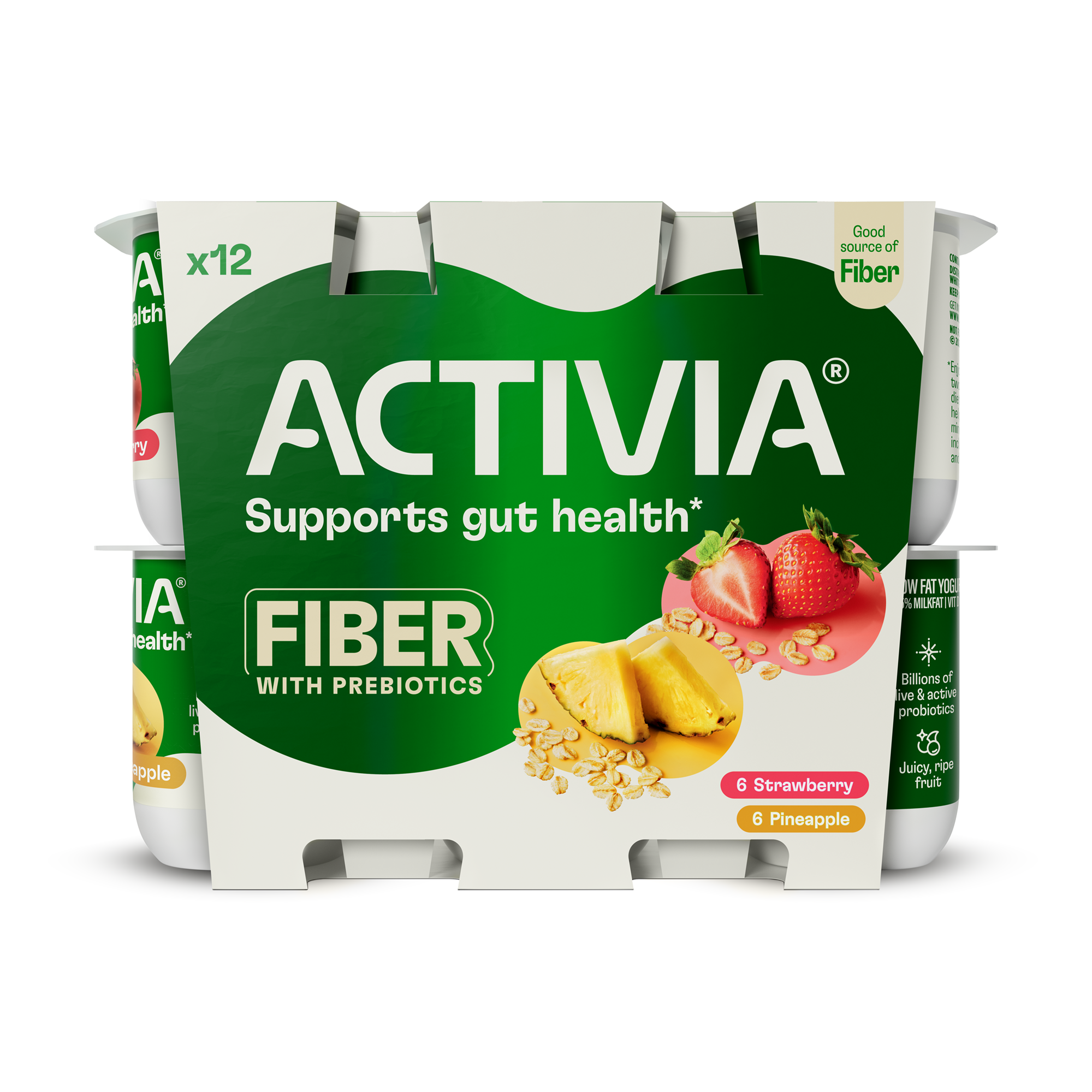
a good source of fiber, meaning one serving meets at least 10% of the recommended daily value. Activia Fiber, for example, delivers 3 grams of fiber per serving alongside billions of live and active probiotics.
That said, more isn’t always better. The viral “fibermaxxing” trend can cause adverse effects to gut health. In fact, raising fiber intake too quickly, or without enough fluid to adapt, can cause digestive issues.
Instead of spiking fiber intake all at once, Danone US, Nutrition and Scientific Affairs Director and Registered Dietitian Kristie Leigh recommends that consumers stick to “consistent, steady consumption throughout the day” in line with recommended daily values. As shoppers flock to grocery stores in search of gut-supporting foods, it’s also crucial they know about all of the gut-health building blocks, including prebiotics and probiotics.
Accessible Nutrition for Every Lifestyle
The gut microbiome changes throughout our lifetime — but development begins in early childhood, when much of its foundation is formed, and nearly 70% of the human immune system is housed in the gut. This understanding informs Danone’s approach to early life nutrition and its broader commitment to supporting gut health across all life stages.

probiotics , including Bifidobacteria breve M-16V, one of the few probiotic strains studied for infant health, and prebiotics.
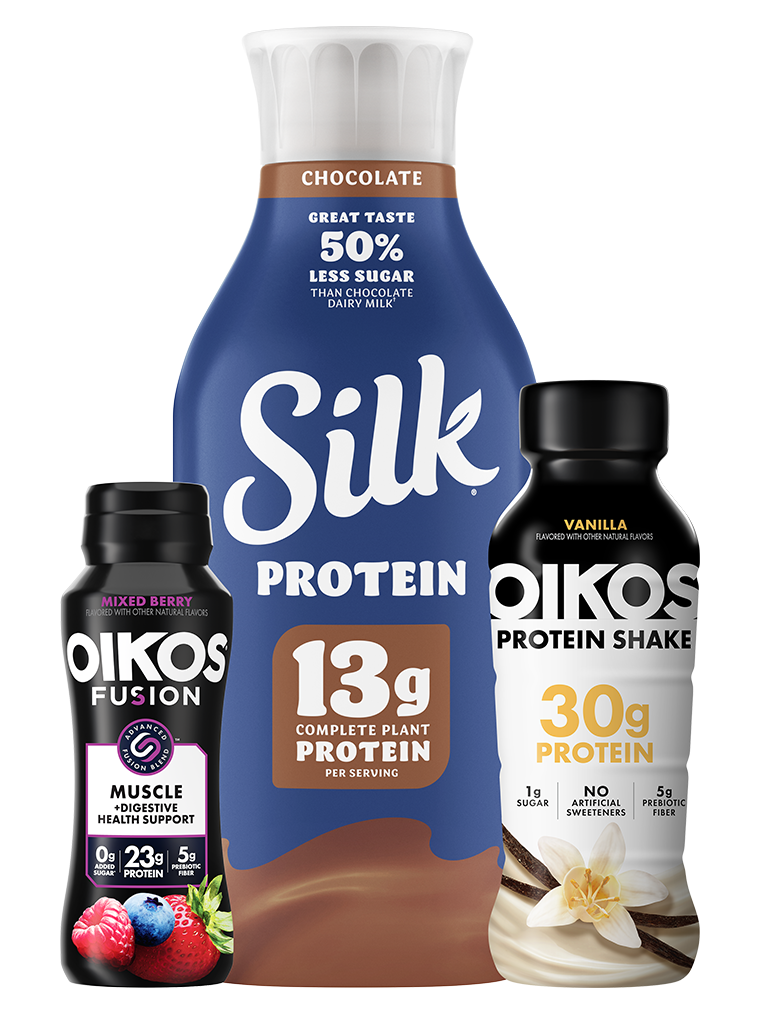
1 users — OIKOS Fusion and OIKOS Protein Shakes combine complete protein with 5 grams of prebiotic fiber per serving (18% of the daily value). For those following plant-based diets, Silk Protein delivers 13 grams of complete plant-based protein and 3 grams of fiber (10% daily value), all derived from plants.
Supporting this product innovation is Danone’s ongoing investment in microbiome science. In 2025, the company inaugurated its OneBiome Lab in Paris‑Saclay, a global research hub designed to deepen understanding of how the gut microbiome influences health across life stages. Building on Danone’s long history in biotics, the lab brings together advanced microbiology, clinical research, and digital tools to help translate complex microbiome insights into practical, science‑backed nutrition solutions.
As gut health science continues to evolve, Danone remains focused on turning complex research into accessible nutrition — helping people of all ages, diets, and lifestyles care for their health from the inside out.
ㅤㅤㅤㅤ
ㅤㅤㅤㅤ